


Italy is one of the most visited countries in the world — and one of the most challenging to visit with a baby.
Cobblestone streets, endless stairs, tiny restaurant tables, and no changing facilities in sight. Yet millions of families travel here every year, and most of them have the time of their lives.
The secret? Planning ahead, packing smart, and knowing what to bring versus what to rent when you arrive.
This guide covers everything you need to know before your trip: strollers, car seats, what to pack, what to skip, how to get around, and practical tips for Italy’s most visited cities.
We’ve gathered real advice from families who’ve done it — not just travel bloggers, but parents who figured it out the hard way.
The honest answer: yes and no.
Italy is a country that genuinely loves children. You’ll be welcomed in restaurants, locals will stop to admire your baby on the street, and Italian families are everywhere. The culture is warm and inclusive.
But the infrastructure is not designed with strollers in mind. Crowded historic centres, cobblestone streets, stairs, and busy city centres can make a big stroller feel cumbersome. Many museums have limited elevator access. Some of the most beautiful places — Positano, Matera, the Cinque Terre — are essentially stairs-only destinations.
The key is going in with realistic expectations and the right gear.
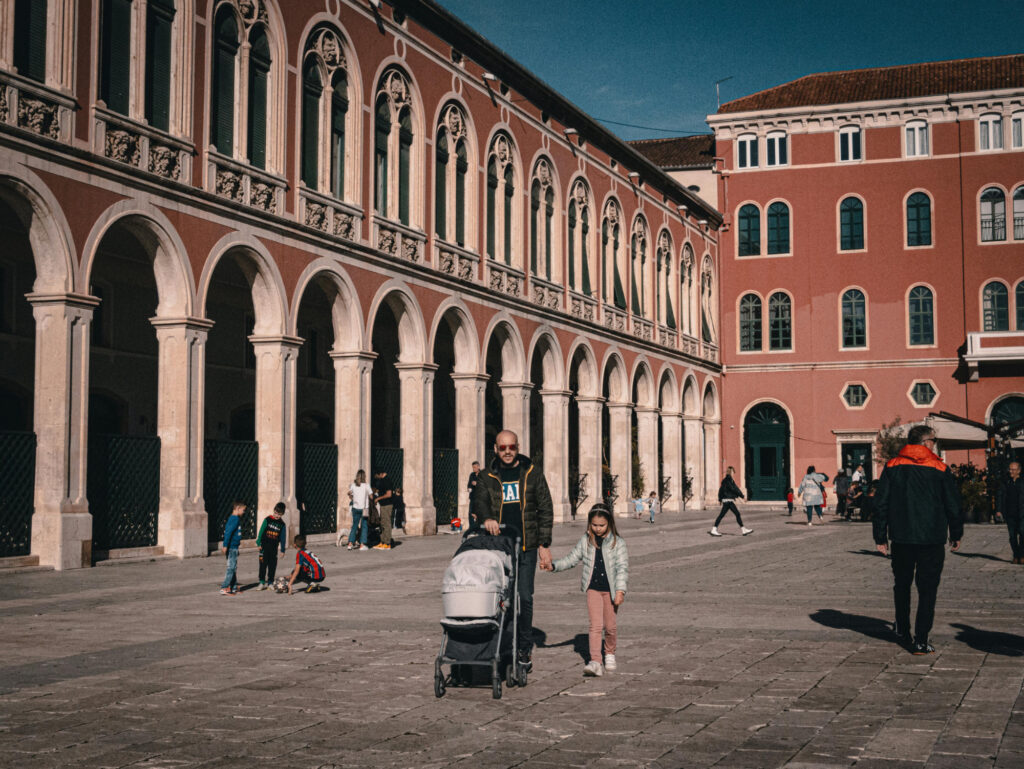
This is the question every parent asks before the trip, and the answer depends on where you’re going.
For cities like Rome, Florence, Milan and Venice: A lightweight, compact stroller with decent wheels is your best friend. Most streets are cobblestones, which makes cheap umbrella strollers with small hard wheels very difficult to push. You need something with larger, rubber wheels that can absorb the bumps.
The most recommended options among families who travel regularly to Italy are compact jogging strollers or premium lightweight strollers. A small jogging stroller with wide wheels handles cobblestones in Tuscan hill towns with ease and is indispensable for longer days of sightseeing.
Key features to look for:
For destinations like Positano, Matera, or the Cinque Terre: Don’t bring a stroller. Matera is essentially the entire town on stairs — the thought of bringing a stroller there is beyond laughable. For these destinations, a good baby carrier or backpack is your only realistic option.
Should you bring your stroller from home or rent one in Italy? If you’re flying with multiple bags and a car seat, bringing a bulky stroller adds stress and airline fees. Renting a quality stroller directly in your destination city is often the smarter choice — it’s waiting for you at the hotel, you travel light, and you can choose the right model for the terrain. More on this at the end of the article.
Italian law requires children to be in an appropriate car seat for all car journeys — this applies to taxis and private transfers too, not just rental cars.
Option 1: Rent from your car rental company Most major rental companies offer car seats. If you’re renting a car, this works well — just make sure to book in advance as they can run out. The downside is that you’re dependent on availability and the seat may not be the model you know how to install correctly. Sometimes they don’t have availability and they told you only when you go to get the car. This is so upset.
Option 2: Bring your own If you’re comfortable with a specific seat and travel by car frequently, bringing your own gives peace of mind. The downside is the weight and bulk at the airport.
Option 3: Rent locally through a baby gear rental service This is increasingly the preferred option for families traveling to multiple cities. A local rental partner delivers a clean, correctly-fitted car seat to your accommodation, and collects it at the end of your stay. No airline fees, no checkout queues, no installation stress.
Important note on taxis: Since many families choose not to drive, rental companies and private cars with car seats add stress they don’t want. In Italian taxis, children under 3 are legally exempt from the car seat requirement if no seat is available — but this is not ideal for safety. For private transfers and longer taxi rides, always request a car seat in advance.
This is where most families make mistakes — either overpacking until their luggage is unmanageable, or underpacking and scrambling to find things locally.
Always pack:
Consider renting in Italy:
Leave at home:
By train: Italy’s train network is excellent and very family-friendly. Trenitalia and Italo both have dedicated family carriages. Trains paired with walking and public transportation make traveling through Italy with young kids very manageable. Fold your stroller, store it in the overhead rack or end of carriage, and enjoy the journey.
By car: Renting a car gives maximum flexibility, especially for Tuscany, Puglia, and Sicily. Book your car seat in advance — don’t assume availability at the counter.
By taxi / rideshare: Available in all major cities. For airport transfers with a baby, always book a private transfer in advance and specify you need a car seat. Many transfer companies in tourist areas are used to this request.
On foot: Italy’s historic centers are best explored on foot. A good carrier for stairs and tight alleys, a compact stroller for longer flat stretches — use both.
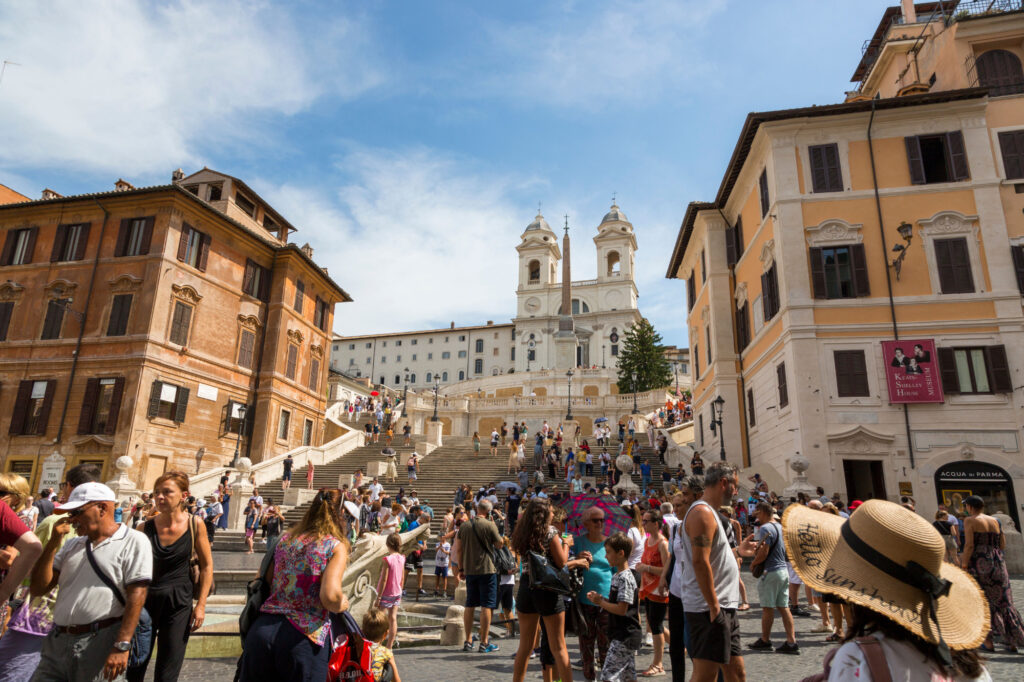
Rome: Stroller-friendly in the EUR and Prati neighborhoods. The historic center (Colosseo, Trastevere, Navona) is cobblestone-heavy — use your carrier for the key sights and switch to the stroller for wider streets. Also we suggest to avoid rush-hour metro.
Florence: More manageable than Rome for strollers. The Oltrarno neighborhood is particularly pleasant. Piazzale Michelangelo is a must but involves a steep climb — carrier recommended.
Venice: No cars, no cobblestones, but endless bridges with stairs. A carrier is essential. Strollers are possible on the main routes but you’ll be lifting constantly. Mestre (the mainland) is much easier for families.
Milan: Italy’s most modern city and the most stroller-friendly. Wide pavements, good metro with lifts, family-friendly parks. Easiest Italian city to navigate with a baby.
Catania and Sicily: Catania’s baroque historic center has manageable cobblestones. The countryside and coastal areas are easier. A local rental partner can deliver gear to your hotel or villa. [Find a partner in Catania →]
Bari and Puglia: The old town (Bari Vecchia) is very narrow and cobblestone — carrier recommended for sightseeing. The new town and coastal areas are easy with a stroller. [Find a partner in Bari →]
Lake Garda and Brescia: One of Italy’s most family-friendly regions. Flat lakeside promenades, excellent infrastructure, many family-oriented hotels. A compact stroller works perfectly here. [Find a partner in Brescia →]
More and more families are discovering that traveling light and renting quality gear locally is simply better than struggling through airports with a car seat under one arm and a stroller under the other.
No airline fees. No damaged gear. No installation stress. Just a quality baby gears waiting for you when you arrive.
Italy with a baby is absolutely doable. It’s chaotic, beautiful, occasionally exhausting, and completely worth it. Go prepared, travel light, and enjoy every cobblestone.